The Question Everyone Asks Before Buying
You've decided you want diamond studs. Maybe it's for yourself, maybe it's a gift. You open the product page, and immediately the second-guessing starts.
0.3ct? 0.5ct? 1ct? What does that even look like on a real ear?
This is the most common question we get at Opreshyne — not "what metal should I choose" or "what's the difference between cuts," but simply: what size diamond stud earring should I actually get?
The answer depends on three things most jewelry brands don't bother to explain: your earlobe size, how you plan to wear it, and which piercing it's going into. This guide covers all three — plus how to build an ear stack that looks intentional rather than accidental.
First, Let's Talk About What "Size" Actually Means
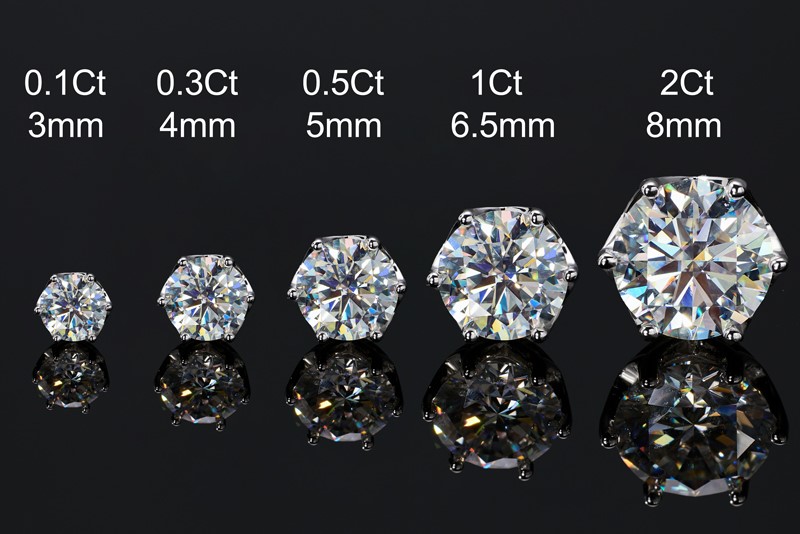
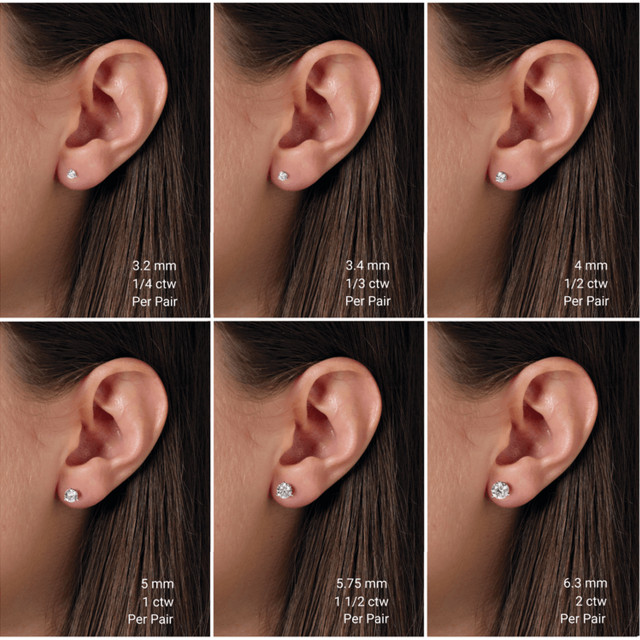
When people ask about diamond stud size, they usually mean carat weight — but what you're actually seeing when you look in the mirror is diameter in millimeters. These two numbers are connected, and understanding the relationship saves a lot of confusion.
Here's a practical reference for round brilliant cut lab grown diamond studs:
| Carat Weight | Approximate Diameter | How It Reads on Ear |
| 0.10 ct | ~3mm | Barely-there, ultra-delicate |
| 0.30 ct | ~4mm | Subtle, clean, everyday wearable |
| 0.50 ct | ~5mm | The classic "stud" look |
| 1.00 ct | ~6.5mm | Statement piece, clearly intentional |
A few things to keep in mind:
Earlobe size matters more than people admit. A 0.5ct stud on a petite earlobe reads differently than the same stone on a larger lobe. If you have smaller earlobes, a 0.3–0.5ct stone often looks more balanced than a 1ct stone that takes over the entire lobe.
Face shape plays a role. Round face shapes tend to look great with slightly larger studs that draw attention upward and outward. Longer, narrower face shapes often work well with smaller stones or shapes (like marquise or pear) that add width rather than volume.
Lighting is not your friend in a store. Jewelry store lighting is designed to make every diamond look spectacular. A 0.5ct stone under halogen looks enormous; the same stone under regular office lighting looks far more modest. Lab grown diamond studs with D–F color and VS+ clarity will hold their sparkle better in natural light than lower-grade stones — this is where quality of cut matters more than size.
The Size Guide Nobody Shares: First, Second & Third Piercing
This is where styling actually gets interesting. If you have multiple piercings — or you're thinking about getting them — the diamond stud sizing logic changes completely depending on placement.
First Piercing (Standard Lobe): Go Here First
Your first lobe piercing is your statement real estate. This is where the eye goes first, and it's where you can wear the most substantial stone comfortably.
Recommended size range: 0.3ct–1ct depending on personal preference and earlobe size.
For everyday wear — office, errands, dinners — most people find 0.5-1ct in a six-prong or four-prong gold setting hits the right balance. It's visible, it's clearly fine jewelry, but it doesn't require you to think about it every time you get dressed.
Setting recommendation for first hole: Classic 4-prong or 6-prong in 14K yellow or white gold. The prong setting maximizes light return, which is why round diamonds look their most brilliant in this style. If you're active or tend to catch earrings on clothing, a bezel setting (where the diamond sits inside a gold rim) is more secure and equally polished.
Second Piercing (Upper Lobe): The Detail Hole
The second lobe piercing sits roughly 5–8mm above the first, still on the lobe. This is not the place for your largest stone.
Recommended size range: 0.05ct–0.4ct
The visual purpose of the second piercing in an ear stack is to add texture and variation, not to repeat the first piercing in a smaller size. This is why a three-stone bar, a small marquise shape, or a mini bezel-set often looks more interesting here than a plain smaller version of your first stud.
Looking at the photo: the upper piercing features a marquise-cut lab diamond stud — a narrow, pointed shape that reads as delicate and elongated in the tighter real estate of the upper lobe.
What to avoid: Studs larger than 0.4ct in the second hole tend to crowd the first piercing and make the whole look feel heavy. The goal in the second piercing is lightness, not competition.
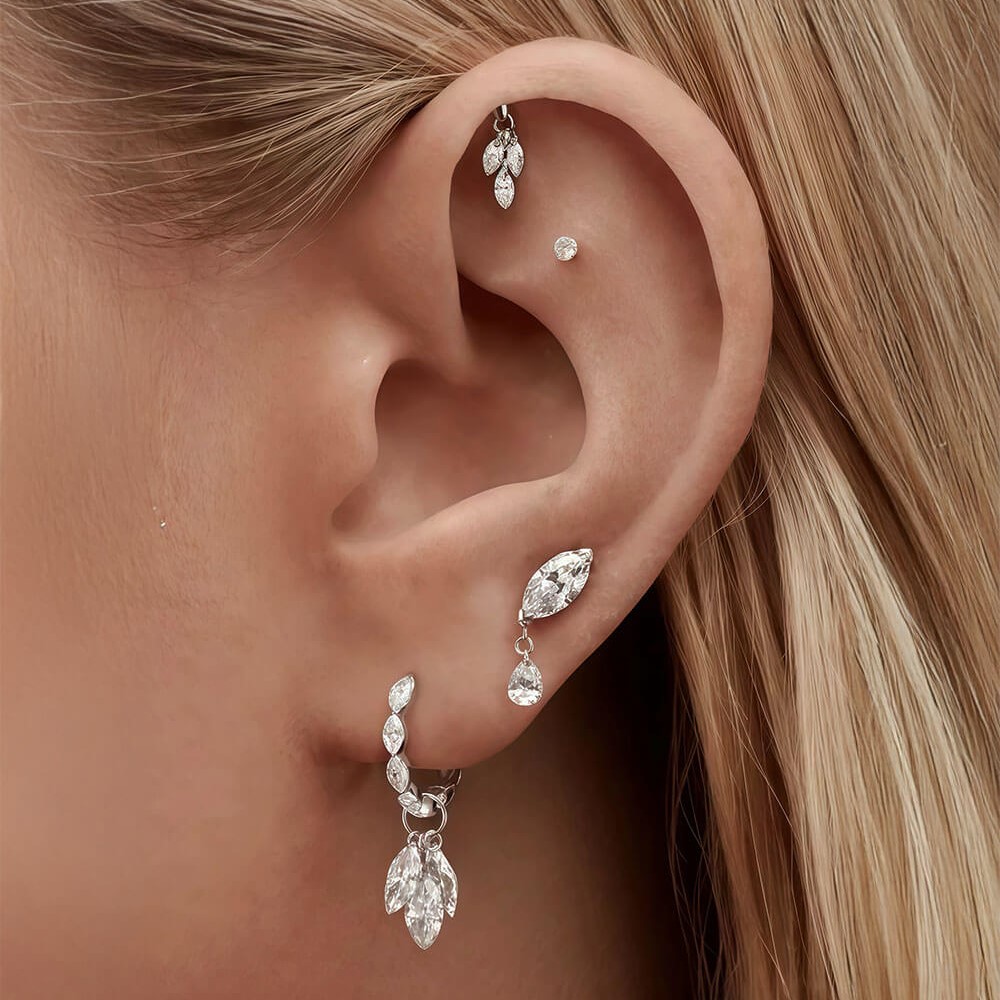
Third Piercing (Helix or Upper Cartilage): Smallest and Most Intentional
Whether you're piercing the helix, tragus, conch, or flat cartilage, the same principle applies: smaller, cleaner, and shaped differently from what's below.
Recommended size range: 0.03ct–0.1ct (approximately 1.5mm–2.5mm diameter)
Cartilage piercings are also thicker than lobe piercings, which means the post length and gauge matters as much as the stone size. At Opreshyne, we offer custom flat-back posts in 14K gold — the style that professional piercers recommend for long-term wear and healing, because the flat back doesn't press against the cartilage the way a butterfly back closure does.
The rule that actually works: If you're building a three-piercing stack, choose pieces in the same metal color but with different stone shapes and decreasing sizes as you move up the ear. Same metal unifies. Different shapes create interest. Decreasing sizes create flow.