When a Ring Does Something Different
There's a specific moment that happens when someone first sees a dangle diamond ring in person.
They look at it. Then they move their hand slightly. Then they look again.
The diamonds shift. Catch the light from a new angle. Settle back into place. And the person looking at it says some version of the same thing every time: I've never seen a ring do that before.
That's the dangle ring. It's not a new concept — jewelry with suspended stones has existed for centuries — but as a ring style, it's been quietly gaining ground among people who want fine jewelry that feels personal and considered rather than default. If you've been looking at diamond rings and everything feels like a variation of the same thing, this is probably the style that's been missing from your search.
This guide covers three dangle ring styles we make at Opreshyne, offering you a new perspective when choosing rings:
What Is a Dangle Diamond Ring, Exactly?
A dangle ring (also called a drop diamond ring or charm ring in some markets) is a ring where one or more diamonds are suspended from the band or setting on small loops or chains, rather than being fixed directly into the metal. The stones hang freely, which means they move when you move your hand — catching light from multiple angles rather than just one.
The practical effect is that a dangle ring with a 0.1ct total diamond weight can look more visually active and interesting than a solitaire with a larger stone, because the eye is drawn to movement. It's a different kind of presence than a traditional diamond ring — less about size, more about personality.
At Opreshyne, all our dangle rings are set in 14K solid gold (yellow, white, or rose gold) with lab grown diamonds — D–F color, VS clarity.
Style 1: The Mixed-Shape Scatter Dangle
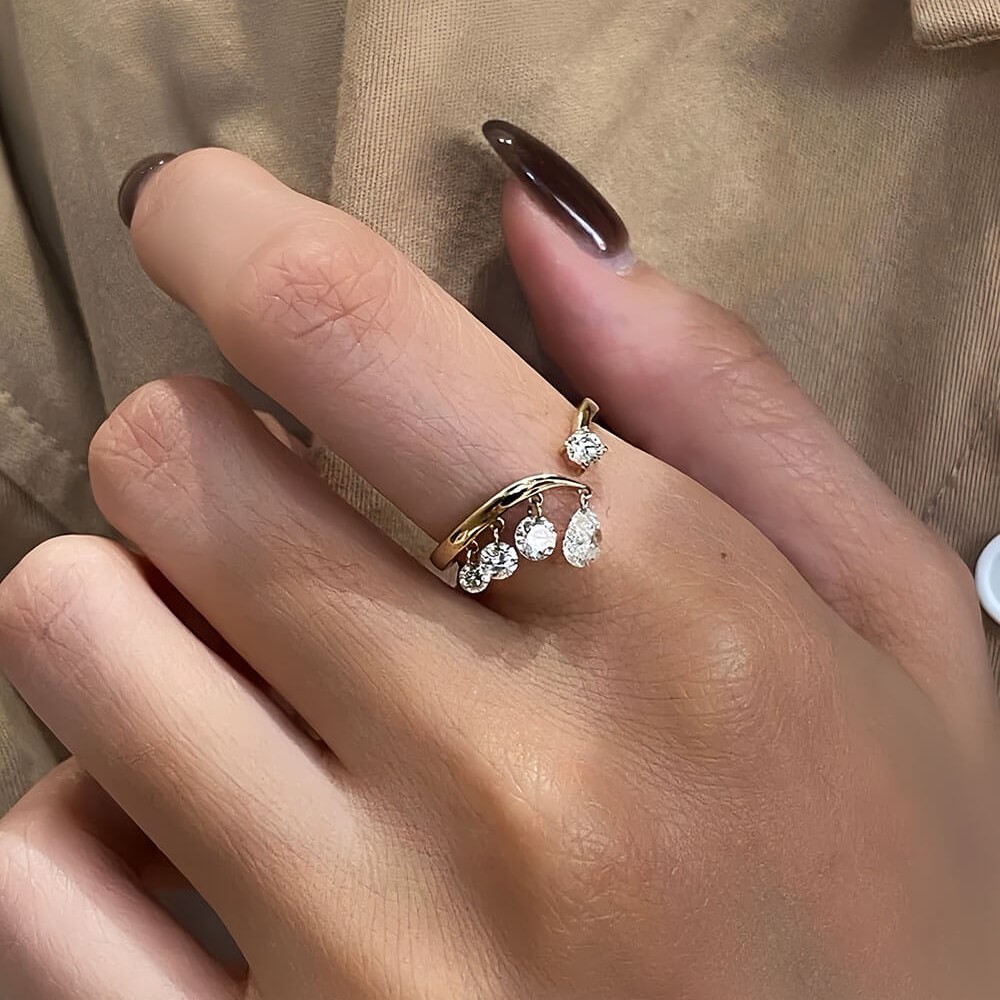
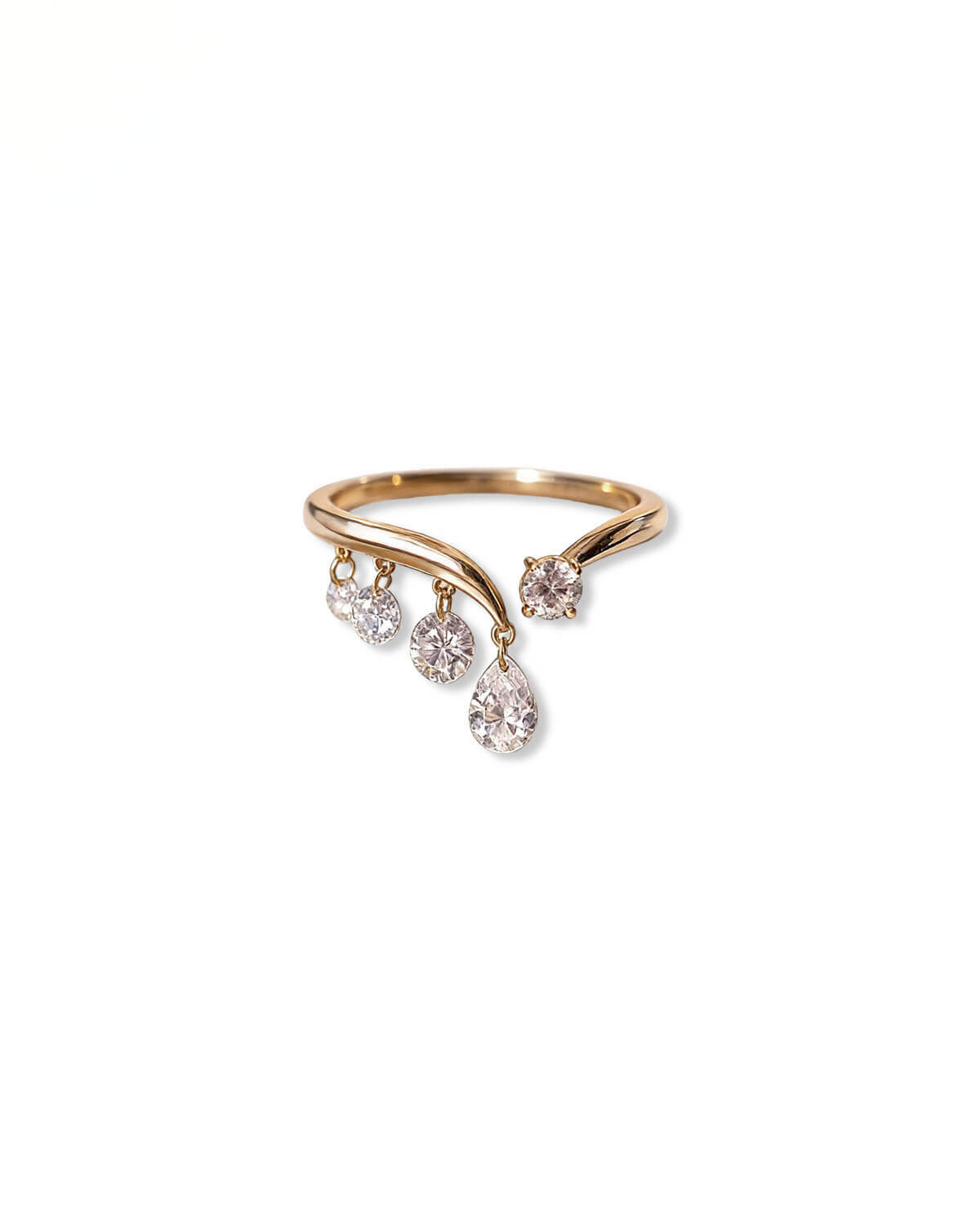
This is the Liora Drift – Open Pear & Round Diamond Ring that gets the most attention in our custom orders, and it's easy to see why.
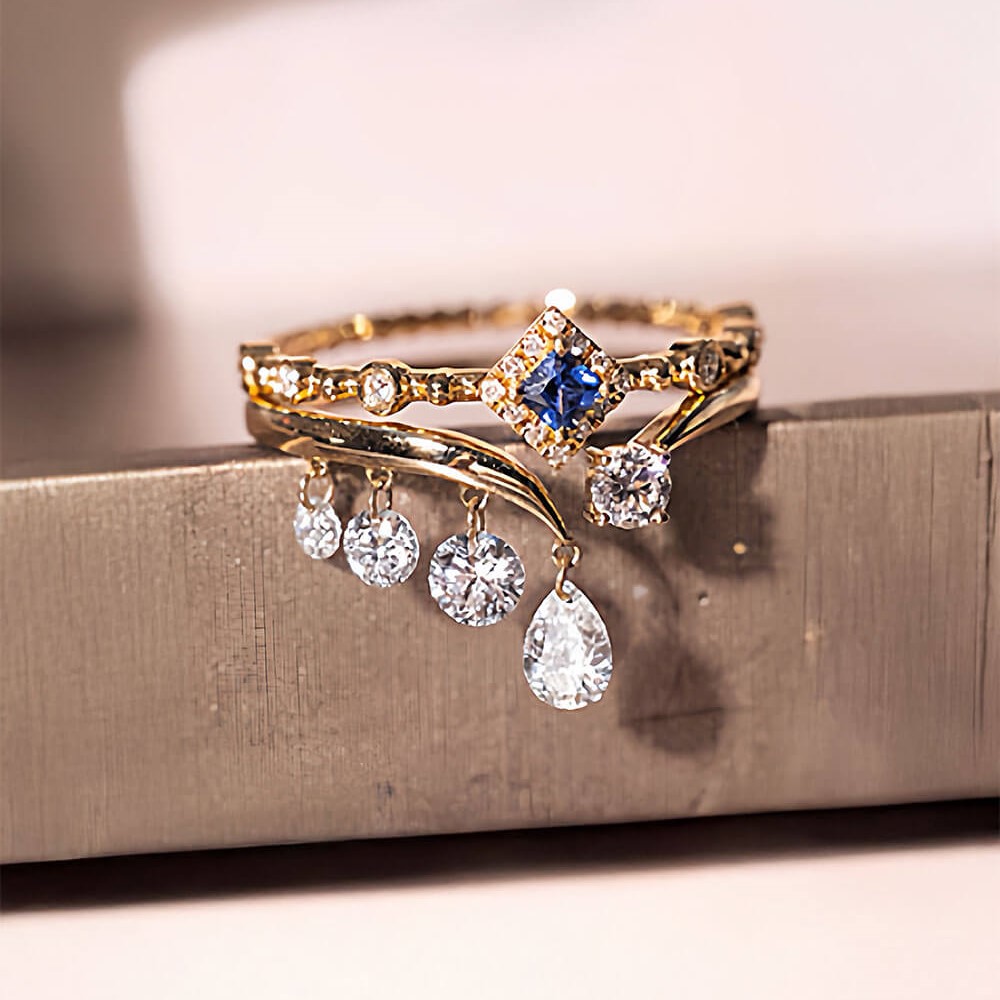
The design features a curved, open-top band — slightly asymmetric, with a clean architectural line — from which three to four diamonds hang at different heights. The mix of shapes is intentional: typically a pear-cut diamond as the longest drop, flanked by round brilliants of varying sizes. The result looks like a constellation that settled on your finger.
What makes this style work is the asymmetry. Most fine jewelry is symmetrical because symmetry reads as "correct" and "balanced." This ring breaks that rule deliberately, and the effect is that it looks like something you chose rather than something you defaulted to.
Style 2: The Tiara / Chevron Dangle
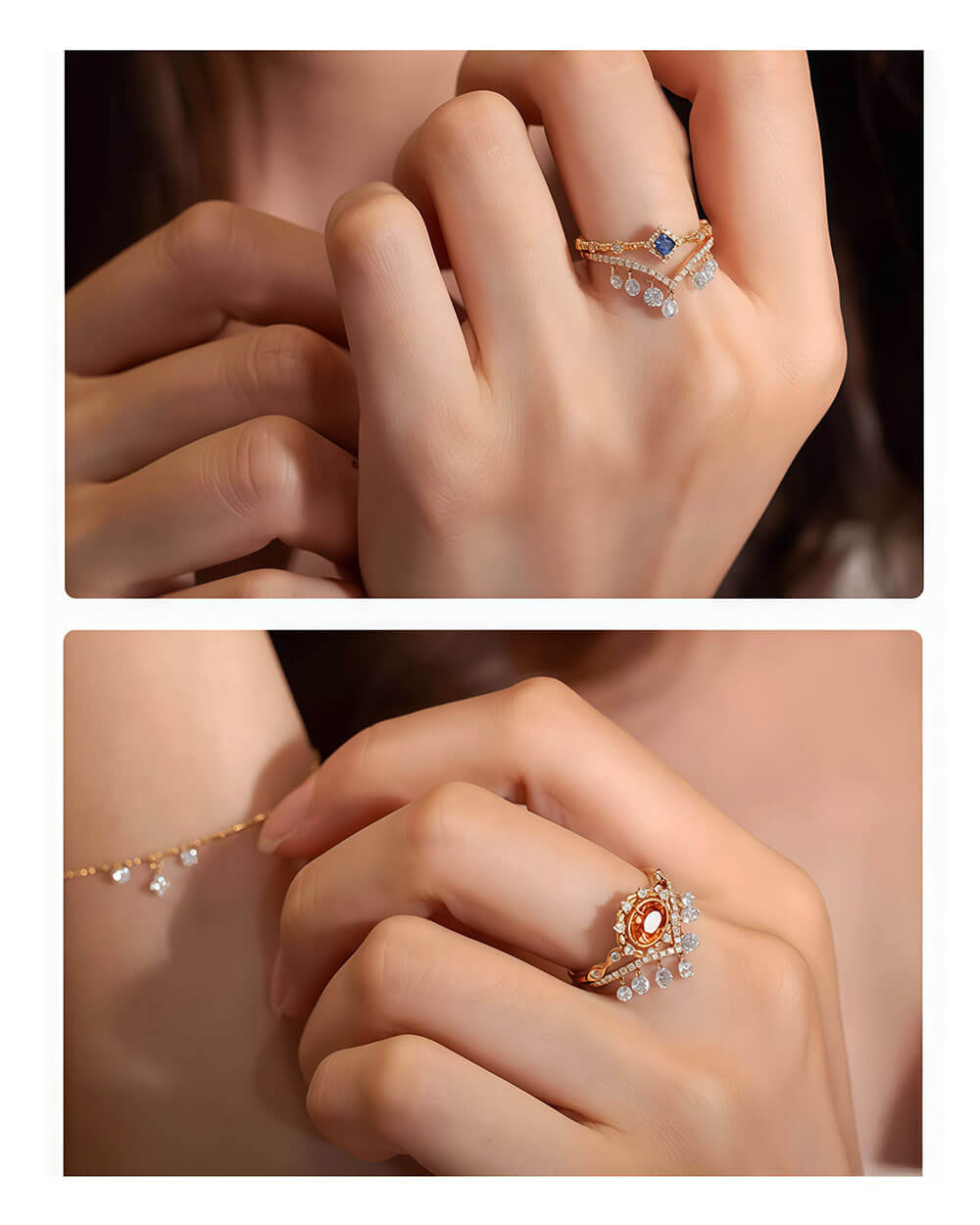
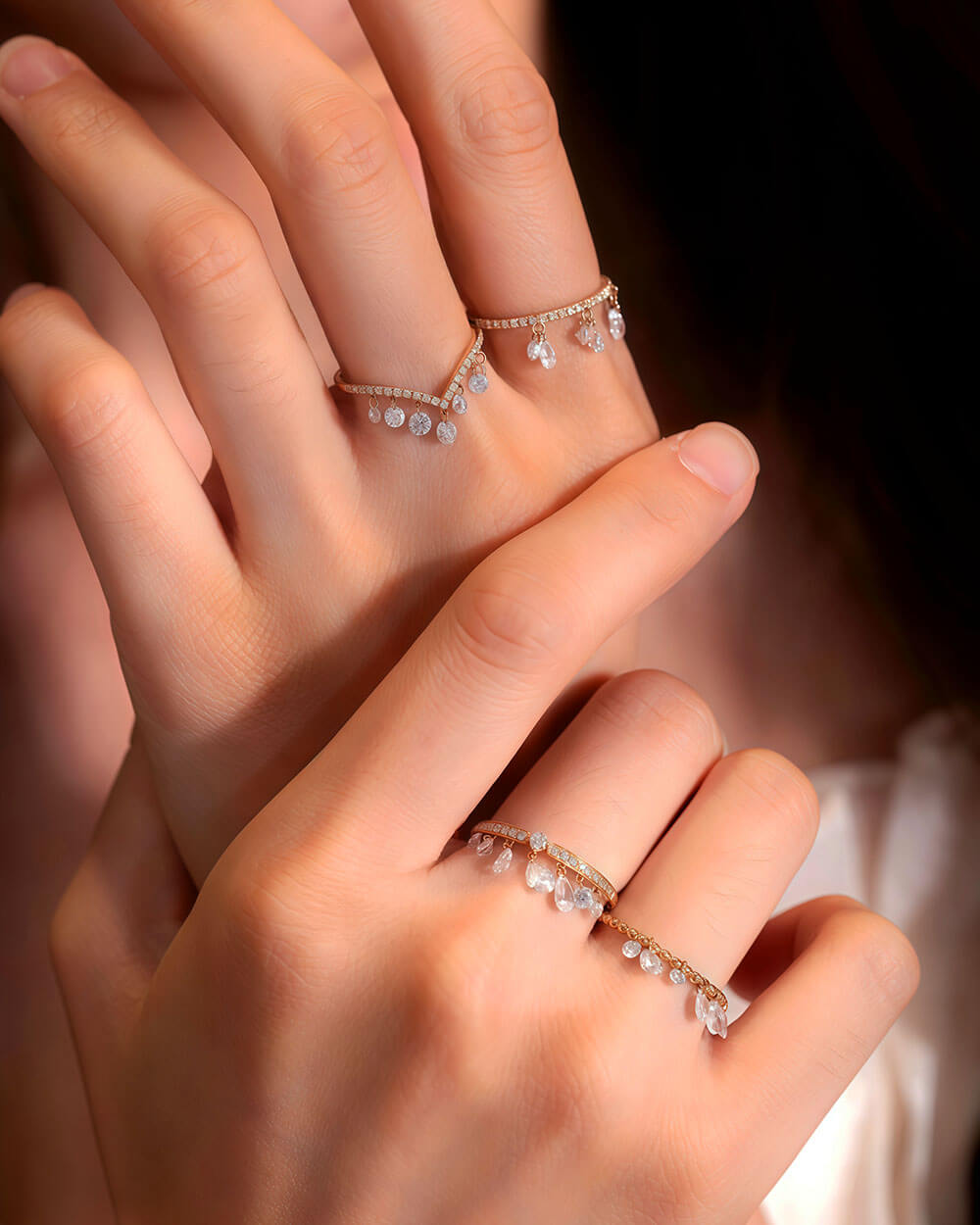
If the scatter dangle is a constellation, Nova Vee – Drilled Round Diamond Stacking Ring is a crown. The band forms a chevron or V-shape, set with pavé diamonds along the arc. From the peak and sides of the V, round brilliant lab diamonds hang in a row — typically five to seven stones, graduating slightly in size toward the center. The overall silhouette, when worn, reads like a tiny tiara sitting on the finger.
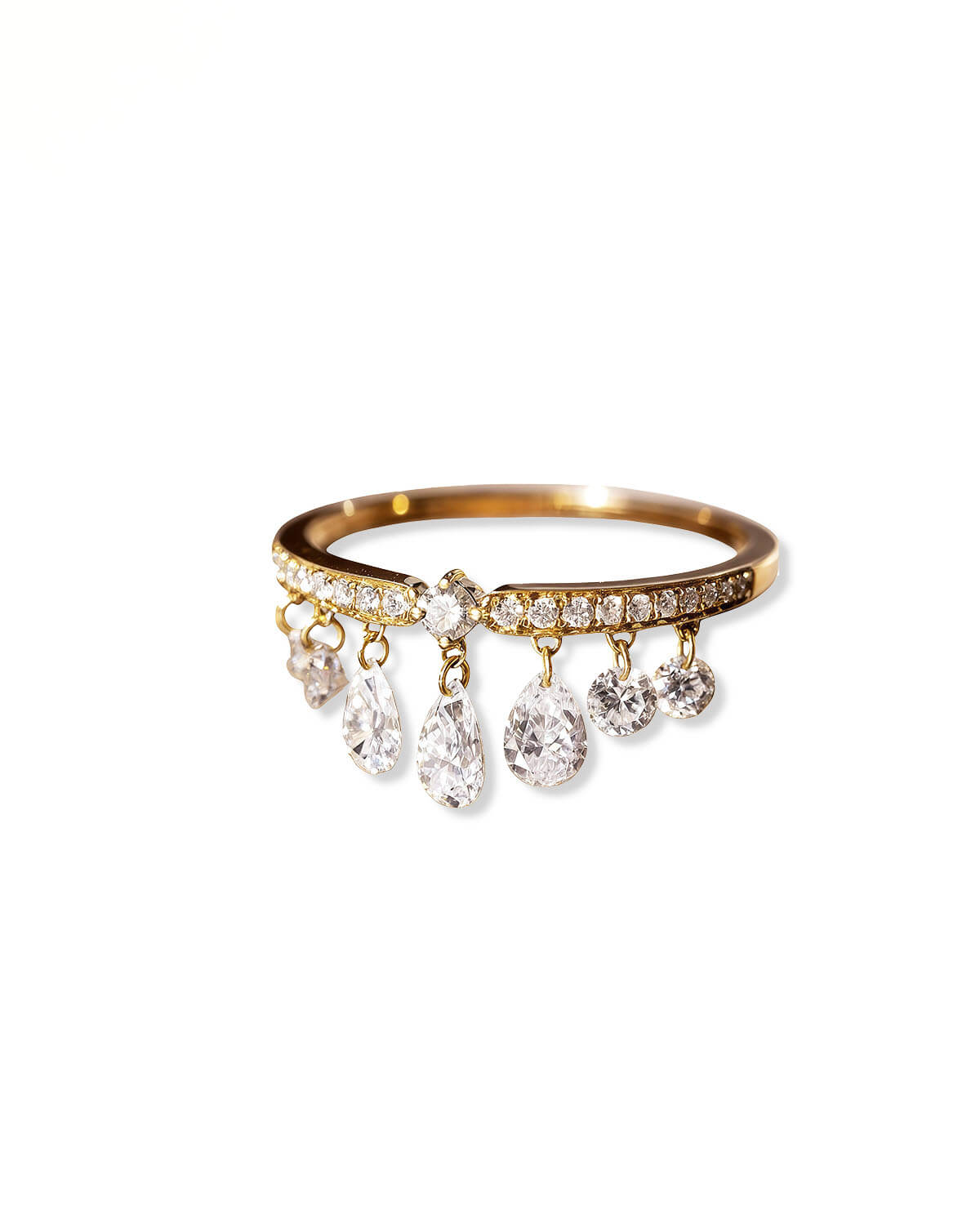
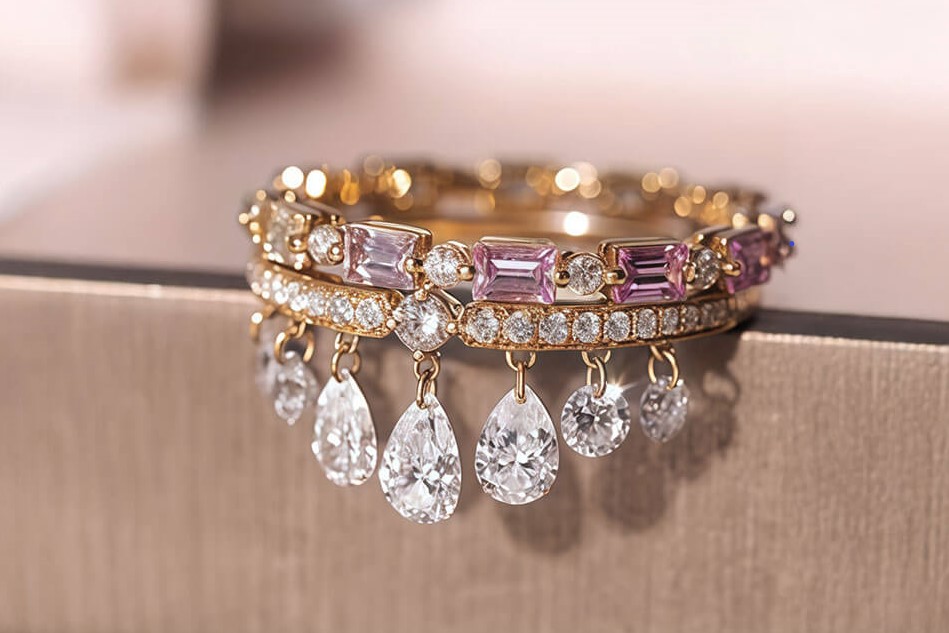
If the V-shape is a tiara for the finger, then the round design of Luna Drip – Pear Shaped Drilled Diamond Ring is a gorgeous diamond garland. The full circular band is paved with diamonds, forming a brilliant ribbon of light. From beneath this ribbon, a row of pendants composed of pear-shaped and round diamonds hangs in a staggered line, like an exquisite fringe, with the largest diamond at the center graduating to smaller ones on the sides. When worn, it isn't tall like a tiara, but rather like a lively curtain of diamonds encircling the finger, dancing lightly with your every move.
Style 3: The Chain Dangle Ring — Where a Ring Becomes Something Else Entirely
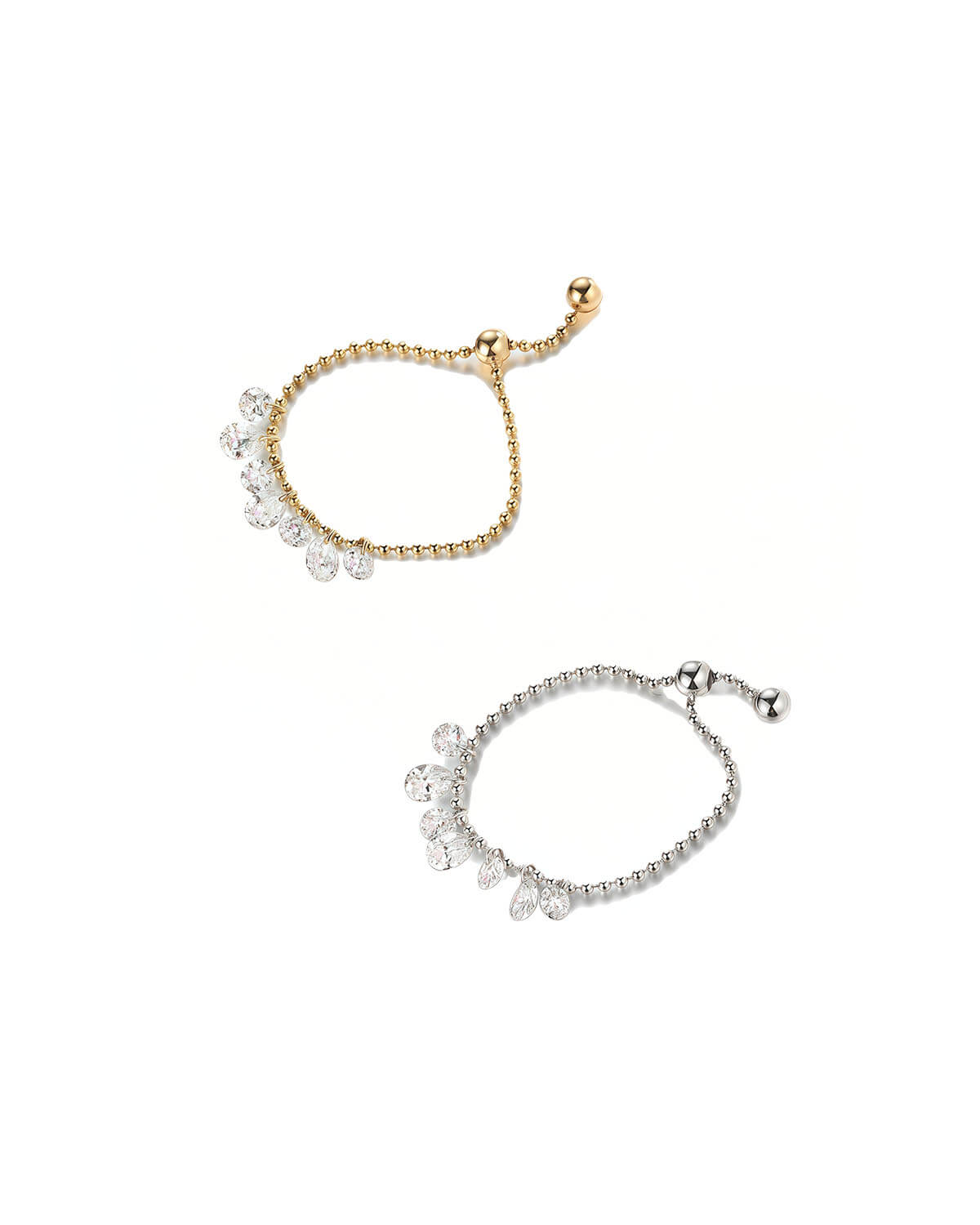
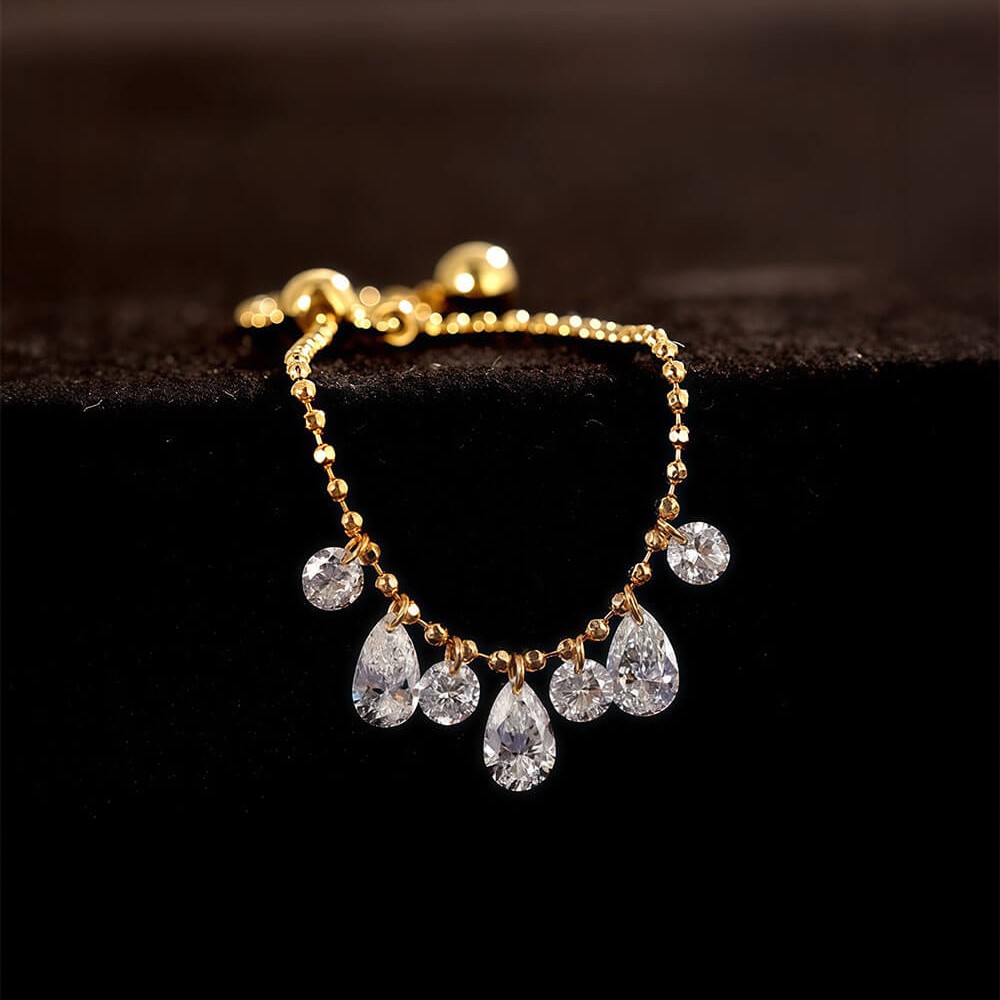
The last dangle ring Celeste Arc – Pear Shaped Diamond Ring Adjustable is unlike anything in the traditional ring category: instead of a solid metal band, the base is a delicate bead chain — the kind you'd expect to see on a bracelet or a fine necklace — that wraps the finger and closes with a small ball clasp at the back. From the front arc of the chain hang seven lab diamonds in alternating shapes: three pear-cuts at the center, flanked by round brilliants on each side. The stones dangle freely from individual loops, spaced just far enough apart that each one moves independently.
You're not quite sure what you're looking at. It reads as a ring, but it moves like jewelry that belongs somewhere else. That slight visual confusion is precisely what makes it interesting.
The adjustable closure matters more than it sounds. Most rings require exact sizing — half a size off and the ring spins, sits wrong, or won't go over the knuckle. Because this ring closes with a bead-chain clasp at the back, it adjusts to fit your finger exactly, every time, and even can custom into any size you want. It works across a range of sizes, which also makes it one of the more practical options as a gift — you don't need to know someone's ring size to get this right.
This ring sits on the finger like something between fine jewelry and a curated art object. The chain base is lightweight enough that you almost forget it's there, but the seven dangling diamonds at the front catch light constantly — from across the table, from the other side of the room. Yellow gold is the natural choice for this style; the warm metal against the bead chain reads like vintage European jewelry, but the lab diamond clarity keeps it feeling current.
A general question comes up often with dangle rings: where does it sit relative to other jewelry? The answer here is that the dangle ring works best as the lower ring in a stack, with a flatter band sitting above it. The stones need clearance to hang downward from the finger, and a band above gives the whole arrangement a natural frame.
If the "normal" ring options aren't quite right for you, this would be a definite right choice. We've also had clients wear this on the middle finger specifically because the chain base and hanging stones read differently there — less like a ring, more like something draped over the hand intentionally.
The bead chain is made in 14K solid gold — not plated, not filled. If you're someone who takes rings off frequently throughout the day, this one is actually easier to manage than a traditional ring because the clasp closure means no pulling over knuckles. If you're someone who wears a ring continuously and wants zero maintenance, the solid-band dangle styles above may suit you better.